
 La subutilización de la fuerza laboral en méxico: más que una tasa de desempleo
In Mexico, the main indicator used to measure unused labor supply is the unemployment rate, which includes people who do not have a job but are looking for one and are available to do so. However, this measurement excludes a segment of the population that needs to be fully integrated into the labor market. Therefore, the objective of this article is to discuss the unmet demand for decent work based on the underutilization of Mexico’s labor force, considering its three components: unemployment, potential labor force, and underemployment due to insufficient hours. Through a document review, descriptive statistical analysis, and the application of multiple logistic regression models, distinct sociodemographic patterns were identified, highlighting the need for more robust parameters that better reflect unmet labor demand. The results show that, in general terms, single individuals, adults, and those with medium or higher levels of education are more likely to be part of the different types of labor underutilization. Likewise, variables such as sex, marital status, having children, school attendance, and area of residence have varying effects across each group. The conclusions highlight the importance of adopting a more comprehensive and disaggregated perspective to improve official statistical measurements and to more effectively guide public policy, in line with the commitments of Sustainable Development Goal 8 on decent work and economic growth.
Keywords:
Mexican labor market; decent work; sustainable development goals; underutilization of the workforce
 Thumbnail
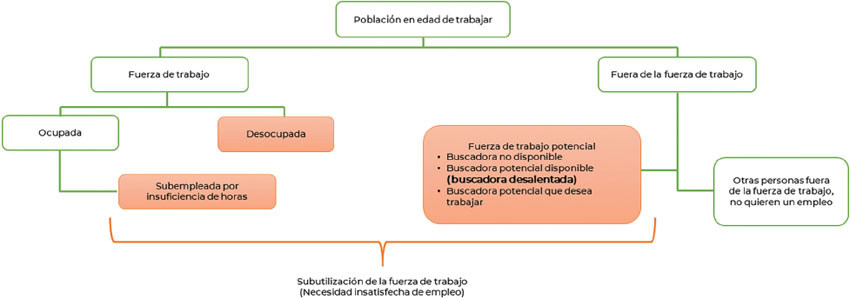 Fuente: Elaboración propia a partir de