
 Reflejos y sombras de la gestión social del agua para consumo humano en Amubri, Talamanca, Costa Rica (1990-2022)
This article analyzes the social management of water for human consumption in the Bribri Indigenous community of Amubri, in the canton of Talamanca, Costa Rica, during the period 1990–2022, focusing on the tensions between state public policies and local sociocultural practices. The central problem addressed is the persistence of deficiencies in access, quality, and sustainability of water services despite institutional interventions and infrastructure investments implemented by the Costa Rican Institute of Aqueducts and Sewers (AyA) in coordination with the Ministry of Health.
The methodology, grounded in a socio-historical and interpretative framework, combines the review and analysis of institutional files, regulations, water quality studies, qualitative interviews, and community workshops.
The results indicate that state management of the resource has been marked by a lack of project continuity, budgetary and technical constraints, community conflicts, and weak local appropriation of aqueduct systems. In addition, the study identifies cultural resistance to water chlorination, divergent perceptions of pollution, and a disarticulation between institutional technical approaches and the Bribri worldview.
The analysis further demonstrates that factors such as climate change, population growth, and the environmental deterioration of water sources exacerbate existing vulnerabilities. It is concluded that the effectiveness of public policies has been limited by a centralized approach that is insufficiently sensitive to the Indigenous sociocultural context. The study advocates for a participatory and intercultural water management model to guarantee the human right to water.
Keywords:
Social water management; indigenous communities; water governance; public policies; community participation
 Thumbnail
 Thumbnail
 Thumbnail
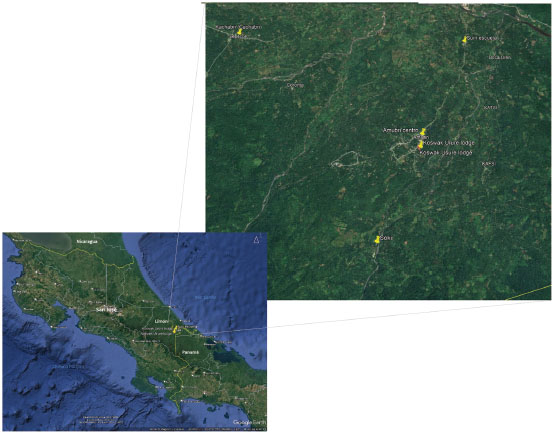 Fuente: elaboración propia con base en Google Earth.
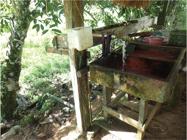
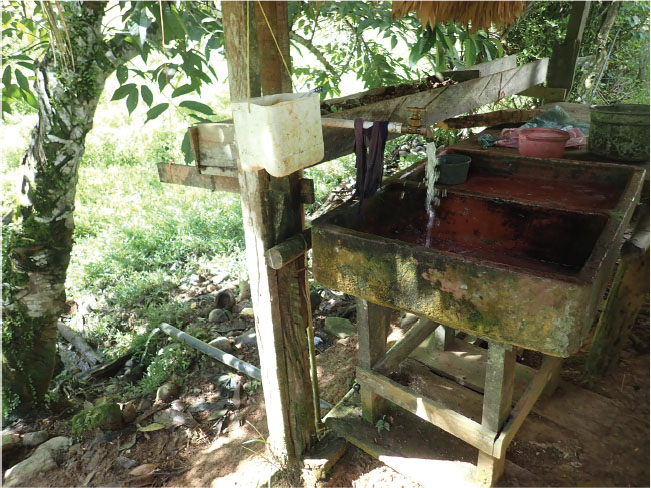 Fuente: Fotografía tomada por Ana Lucía Mora González el 29 de setiembre del año 2021.
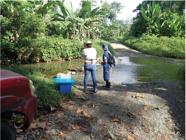
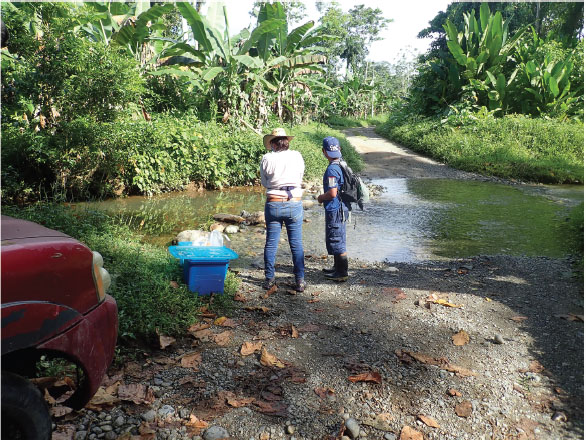 Fuente: Fotografía tomada por Ana Lucía Mora González el 29 de setiembre del año 2021.